Dental Bridges for Fixed, Natural-Looking Tooth Replacement
A stable, non-removable way to close the gap of one or more missing teeth.
A dental bridge closes the gap of a missing tooth by anchoring a custom porcelain replacement to healthy neighboring teeth or implants. It restores your bite, your smile, and the natural balance of your mouth.
What this treatment involves.
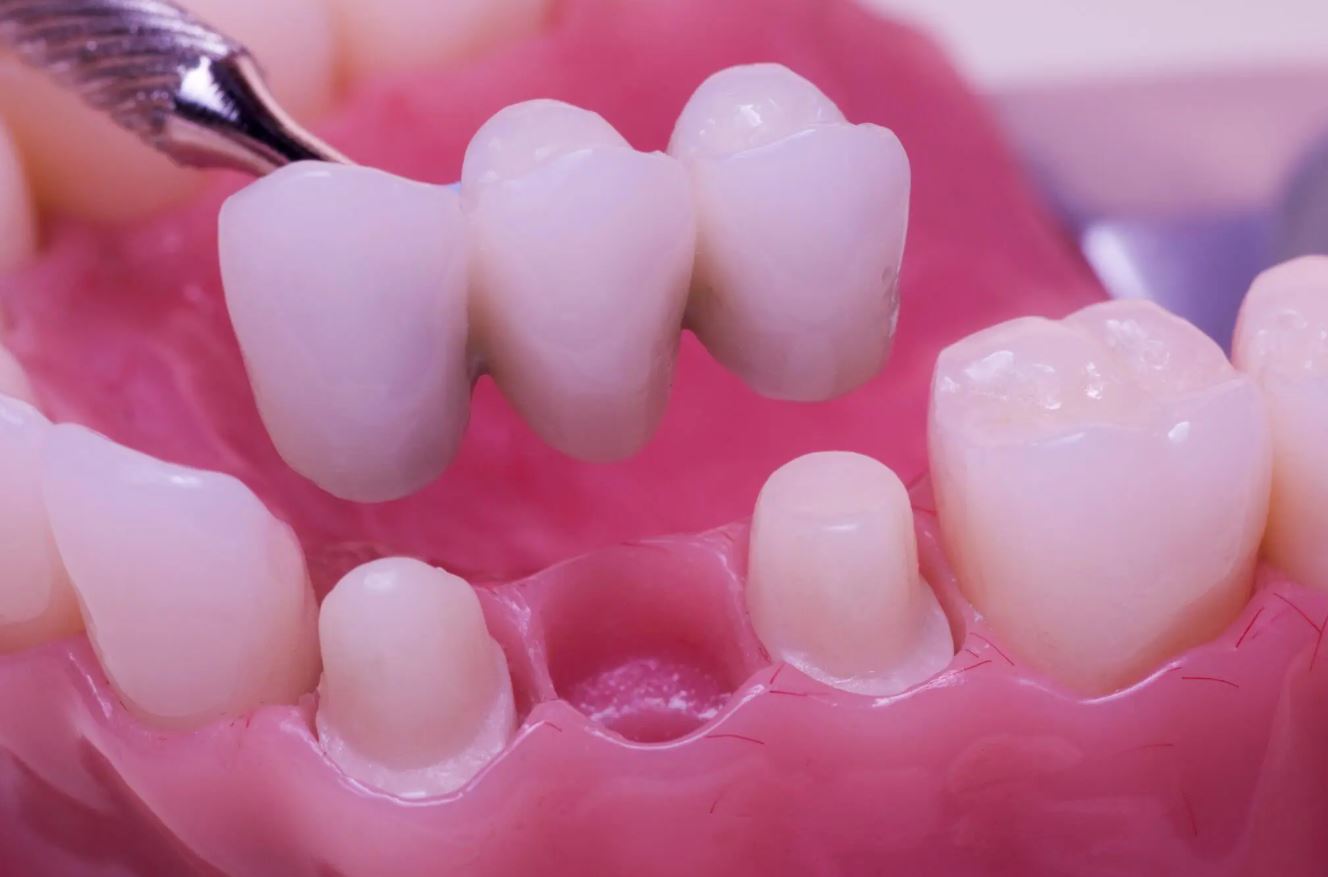
A traditional bridge is made of two crowns on either side of the gap — called abutments — with one or more replacement teeth (pontics) fused between them. The bridge is bonded permanently so it feels and functions like your own teeth. An implant-supported bridge uses implants rather than natural teeth as anchors, which is often preferable when neighboring teeth are healthy or unrestored.
Choosing between a bridge and an implant is a personal conversation. Bridges are usually completed faster and can be a great option when neighboring teeth already need crowns. Implants preserve bone and don't rely on other teeth for support. Dr. Allen will walk you through the honest trade-offs of both.
A well-made bridge blends into your smile, restores chewing efficiency, and prevents the neighboring teeth from tilting or drifting into the empty space — a common consequence of leaving a missing tooth untreated.
You may need or want this treatment if…
- You have one or a few missing teeth in a row.
- You want a fixed, non-removable replacement without surgery.
- Neighboring teeth already need crowns and can serve as anchors.
- You want to prevent nearby teeth from shifting into the gap.
Why patients choose this treatment.
- Restores natural chewing and speech
- Prevents surrounding teeth from tilting or drifting
- Natural-looking porcelain shade-matched to your smile
- Fixed in place — no removal for cleaning
- Typically completed in two visits
Who this is a good fit for.
- Patients missing one or a few adjacent teeth
- Anyone with healthy neighboring teeth or existing implants for support
- Patients not ready for individual implant placement
- Patients replacing a failing older bridge
A calm, considered process — from consultation to completion.
01
Preparation
Neighboring teeth are gently reshaped, or implants placed as anchors.
02
Digital Impressions
A precise scan captures the bite so the bridge fits perfectly.
03
Temporary Bridge
A comfortable temporary protects your teeth while the final bridge is crafted.
04
Final Bonding
The custom porcelain bridge is bonded in place and polished for a seamless finish.
Caring for your smile afterward.
Brush your bridge like natural teeth and use a floss threader or water flosser to clean beneath the replacement tooth. Consistent hygiene protects both the bridge and the anchor teeth for many years.
How long do dental bridges last?+
With good hygiene and regular checkups, a well-made bridge commonly lasts ten to fifteen years or longer.
Bridge or implant — which is right for me?+
It depends on the health of neighboring teeth, bone volume, timing, and budget. Dr. Allen will explain the trade-offs honestly.
How do I clean under a bridge?+
Special floss threaders, small brushes, or a water flosser make it simple to keep the area beneath the replacement tooth clean.
Will a bridge look natural?+
Yes. Modern porcelain is shade-matched to your existing teeth and shaped to look completely natural in your smile.
Does insurance cover bridges?+
Most PPO plans cover a portion of restorative bridges. Our team will verify your specific benefits before treatment.
You may also be interested in.
Restorative Dentistry
Dental Implants
A long-term solution for a single missing tooth, several teeth, or a full arch.
Restorative Dentistry
Dentures
Beautifully crafted full, partial, and implant-supported options.
Oral Surgery
Tooth Extractions
Comfortable, careful removal — with a clear plan for what comes next.
Ready when you are
Schedule your dental bridges consultation.
Serving Plantation, Sunrise, Davie, and greater South Florida — with unhurried, honest dentistry.